Call Now for 24/7 Emergency Repairs(984) 271-2113
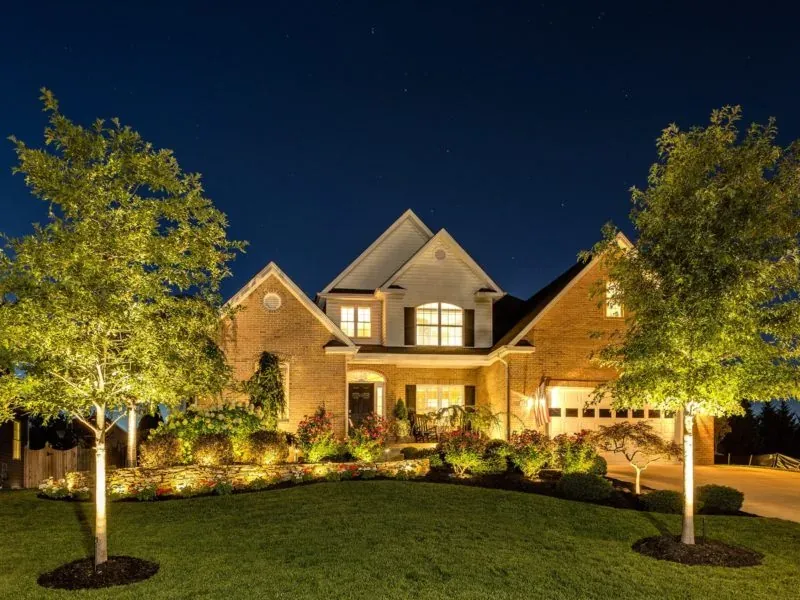
Brick home at night with uplit trees, lit flower beds and warm landscape lights

Landscape Lighting Installation Services Durham, NC

Dark walkways, steps you cannot see and a yard that disappears at night? Brian Electric LLC installs path lights, tree uplights and garden lights for homes in Durham and nearby towns. As licensed electricians, we wire the power side safely too.

  • Licensed in North Carolina
  • Low voltage LED systems
  • Safe outdoor wiring
Call Now · (984) 271-2113

Around Your Yard

Outdoor Lights We Install Around Durham Homes

Good landscape lighting is a few lights in the right places, not a lot of lights everywhere. As a licensed electrician in Durham, NC, these are the spots we light most often.

Path and Walkway Lights

Short lights along a walk or the edge of a driveway. Spaced so the pools of light just meet, they show the edge without looking like a runway.

  • Front walks
  • Side yards
  • Driveway edges

Uplights for Trees and the Front of the House

A light at the base, aimed up. It shows off a big oak or the front of your home, and it makes the house easy to find at night.

  • Large trees
  • Columns
  • House fronts

Garden and Flower Bed Lights

Low, wide lights that spread across plants and beds. They add depth to the yard without lighting up every corner.

  • Flower beds
  • Shrubs
  • Mulch beds

Step, Wall and Patio Lights

Small lights set into steps, low walls and patio edges. A step you can see is a step you will not trip on.

  • Outdoor steps
  • Retaining walls
  • Patios

Deck and String Lights

Lights on deck posts and rails, or string lights over a patio. They need a safe outdoor outlet or circuit to plug into, and we can add one.

  • Decks
  • Pergolas
  • Back patios

How It Is Powered

Low Voltage or Line Voltage?

Most yard lights today run on low voltage. A transformer turns your home's 120 volts into a safe 12 volts. We install low voltage systems for homes in Durham, and we wire the outlet or new circuit that powers them.

  1. Step 1

    GFCI Outlet

    A weatherproof outdoor outlet with an in-use cover. It feeds 120 volts to the transformer.

  2. Step 2

    Transformer and Timer

    Steps 120 volts down to a safe 12 volts. A timer or photocell turns the lights on at dusk.

  3. Step 3

    12V Cable and Lights

    One cable runs about 6 inches under the soil. Path lights and uplights connect along it.

Power
Low voltage: 12 volts, from a transformer
Line voltage: 120 volts, the same as your outlets
Wire depth
Low voltage: About 6 inches under the soil
Line voltage: 12 to 24 inches, or in conduit
If a wire gets cut
Low voltage: Low shock risk
Line voltage: Needs GFCI protection and careful burial
Adding or moving lights
Low voltage: Easy. Fixtures connect along the cable
Line voltage: Harder. Each change is new wiring
Best for
Low voltage: Paths, gardens, trees, steps and patios
Line voltage: Floodlights and very long runs

Why an Electrician Matters Here

The transformer needs a weatherproof GFCI outlet with an in-use cover, on a circuit that can carry the load. Many outdoor outlets are old, overloaded or not GFCI protected. We check that part first, and fix it if needed.

Sizing the Transformer

Add up the watts of every fixture, then leave room to grow. A transformer that is sized right keeps every light the same brightness, even the one at the far end of the run.

Design

Lighting Techniques That Make a Yard Look Good at Night

The same fixture can look great or flat, depending on where it sits and where it points. These are the four techniques we use most in Durham yards.

Uplighting

A light at the base of a tree, column or wall, aimed up. It is the easiest way to make a home stand out at night.

Where it works
Big trees, house fronts, columns
Tip
Use two lights from different sides on a large tree, so it does not look flat.

Moonlighting

A light set high in a tree, aimed down. The branches cast soft shadows on the ground, a lot like moonlight.

Where it works
Patios and lawns under large trees
Tip
The fixture is mounted with straps made for trees, not nails or screws that harm the bark.

Grazing

A light placed close to a textured wall and aimed up along it. It brings out the shape of brick and stone.

Where it works
Brick chimneys, stone walls, porch columns
Tip
Smooth walls look better with a wider, softer light set farther back.

Path Spread

Low lights that throw a wide circle of light on the ground. You see the path and the plants beside it, not a row of bright dots.

Where it works
Walkways, steps, garden edges
Tip
Set them on alternating sides of the walk, so the path does not look like a runway.

Warm Light Looks Best Outside

  • 2700K Warm

    Like a porch light. Best for most homes.

  • 3000K Soft white

    A little whiter. Good on stone and newer homes.

  • 4000K+ Cool

    Blue and harsh outside. We rarely use it.

Light the Yard, Not the Neighbors

  • Aim lights at the tree, wall or path, never out toward the street or a window.
  • Use fixtures with a hood or shield, so you see the light and not the bulb.
  • Less is more. A few soft lights beat one bright flood.

The Process

How We Install Landscape Lighting

Most of the work is planning and power. Here is how a landscape lighting job goes for a home in Durham, from the first walk around to the night the lights come on.

  1. Walk the yard

    You show us what you want to see at night: the walk, a tree, the front of the house.

  2. Plan the layout

    We choose the fixtures, where each one goes and the size of the transformer.

  3. Call 811

    Underground lines get marked before anyone digs.

  4. Power first

    We check or add the outdoor GFCI outlet and mount the transformer.

  5. Cable and fixtures

    The cable goes in a shallow trench and each light connects along it.

  6. Aim after dark

    We adjust each light at night and set the timer or photocell.

Calling 811 Before We Dig

Gas, power, water and cable lines can run just under a lawn. In North Carolina, the law says to contact NC 811 at least three working days before digging. The utilities then mark their lines with paint or flags, and we dig around them.

How Deep the Wire Goes

  • Low voltage landscape cable (12V)6 in
  • 120V cable on a 20 amp GFCI home circuit12 in
  • 120V cable in rigid metal conduit6 in
  • 120V direct burial cable, no GFCI24 in

Minimum cover from the electrical code. Low voltage cable is the shallow, easy one, which is a big reason it is so common in yards.

Timers, Photocells and Smart Controls

  • PhotocellTurns the lights on at dusk and off at dawn, on its own.
  • TimerTurns them off at a set hour, like 11 pm, to save power.
  • Smart controlChange the schedule or switch lights from your phone.

Repair and Replacement

Landscape Lighting Repair and Replacement

Already have yard lights that stopped working? We find the fault, fix it, and replace fixtures or a transformer when they are worn out. Here is what usually goes wrong in an outdoor system.

The whole system is dark
A tripped GFCI outlet, a timer or photocell set wrong, or a transformer that has failed.
One section is out
A cable cut by a shovel, an edger or a mower, or a loose connection along the run.
Lights get dimmer down the line
Too many fixtures on one run, a transformer that is too small, or cable that is too thin for the distance.
One light will not come on
A burned out lamp, water in the fixture or a corroded socket.

Check These First

  1. Press reset on the outdoor GFCI outlet
  2. Check that the timer shows the right time
  3. Make sure the photocell is not covered by plants or dirt

Still dark? Call us and tell us what you see.

Call (984) 271-2113

Old Halogen Lights to LED

Many older yard systems still run halogen lamps that burn out often and use more power. Switching to LED fixtures cuts the load on the transformer, and in many yards the cable that is already in the ground can stay.

Customer Reviews

What Customers Say About Our Work

5.0

Read Our Google Reviews
  • Forrest B.Google review

    My wife and I can't say enough about Brian Electric. This was our third time hiring Brian to help with renovations. His work is exceptional and we are very impressed with his knowledge/quality of his work. We will definitely hire him again in the future!!

  • Bridget D.Google review

    Brian was amazing. He was able to come the same day I called. He was able to quickly diagnose and fix the problem. He was very informative and answered all of my questions. I will definitely recommend and will be using his services again.

  • Robert P.Google review

    Brian installed a Kitchen Light fixture over my Kitchen Island. He arrived on time, was very professional and had the experience and know-how to install what I would consider a difficult installation in a short amount of time.

  • Jackie V.Google review

    If I could give 10 stars I would. He was so helpful with my major project, and really looked out for my best interests. He even took on a spontaneous smaller project that popped up as he was finishing the larger one!

  • Robin L.Google review

    He came and installed a new light above our kitchen sink. Excellent work, prompt service and a truly good guy. What more could you ask for? We will definately call Brian for any work we may need in the future. I would highly recommend him to anyone in need of quality electrical work!

  • Barbara M.Google review

    Brian traced down our light and receptical outage. He made the repair in under an hour and had our home in working order again.

  • De K.Google review

    I cannot say enough good things about Brian Electric. He's corrected other marginal work and has completed all sorts of jobs in the past with excellent craftsmanship. I only wish there was more of Brian to go around!

  • Martin M.Google review

    Brian Electric has provided us with quality, on-time service for all of our electrical needs in the house we moved into a year ago.

  • Robby C.Google review

    Super professional! Great quality work with attention to detail. Highly recommend. This is my new go to electrical contractor!

  • Brandon S.Google review

    On time, professional and excellent quality work. Brian Electric is one of the best electricians we've worked with.

Service Area

Landscape Lighting in Durham and the Triangle

We are based in Durham and install landscape lighting at homes all over the Triangle. Not sure if we come to your town? Call and ask.

Neighborhoods We Serve

View All Service Areas

FAQ

Landscape Lighting FAQs

Not sure what your yard needs? Call and tell us what you want to see at night, and we will plan it with you.

Call (984) 271-2113

Is low voltage or line voltage better for a yard?

For most yards, low voltage. It runs on a safe 12 volts, the cable sits about 6 inches deep, and lights are easy to add or move later. Line voltage still makes sense for bright floodlights and very long runs.

How much power do LED landscape lights use?

Very little. Most LED path and garden lights use only a few watts each, far less than the old halogen lamps they replace. A timer or photocell keeps them off during the day.

What color of light looks best outside?

Warm light, around 2700K to 3000K, looks best on most homes and plants. Cooler, bluer light often looks harsh at night.

Will my lights shine into my neighbor's windows?

Not if they are placed and aimed well. We point lights at the tree, wall or path, and use fixtures with a hood or shield so the bulb is hidden.

Can you add lights to a system I already have?

Usually, yes. If the transformer has room for more watts, new fixtures can connect to the cable that is there. If it does not, a larger transformer can be added.

Why did some of my outdoor lights stop working?

When the whole system is dark, check the outdoor GFCI outlet and the timer first. When only one part is out, a cut or loose cable is common. Call us and tell us what you see, and we will find the fault.

Call 24/7: (984) 271-2113