
Regular outlet
Level 1
3 to 5miles of range per hour
After one night (about 10 hours)About 30 to 50 miles
- Power
- 120 volts, a standard wall outlet
- Install
- Uses the cord that came with the car
- Best for
- Plug-in hybrids and short daily drives
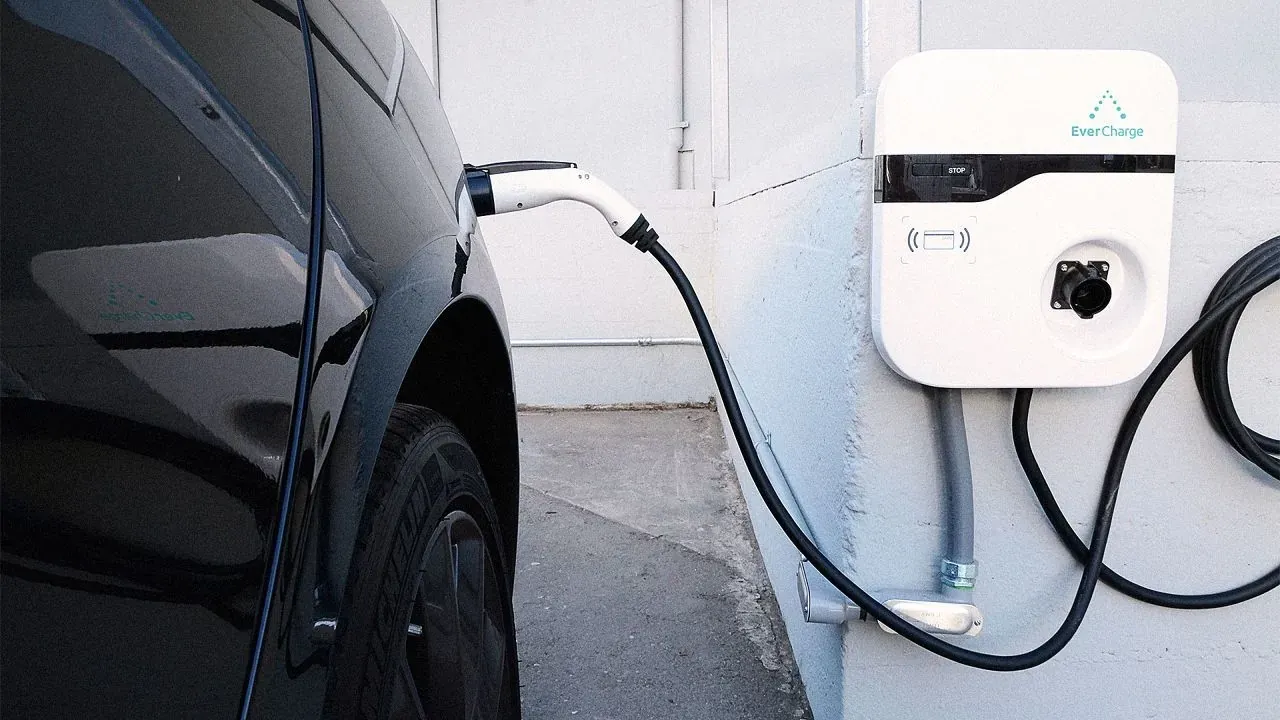
Bringing home an EV, or tired of charging from a regular outlet? Brian Electric LLC installs Level 2 home chargers for homes in Durham and nearby towns. We check your panel first, run a dedicated circuit, and handle the permit and inspection.
Charging Speed
Every EV can charge from a regular outlet, but it is slow. A Level 2 charger on a dedicated 240V circuit fills most cars overnight. As a licensed electrician in Durham, NC, we install Level 2 chargers in garages and driveways.
Numbers are typical. The real speed depends on your car and on how many amps the charger is set to.
Panel Check
A Level 2 charger is one of the biggest loads in a home. Before we install one, we do a load calculation. It looks at four things:
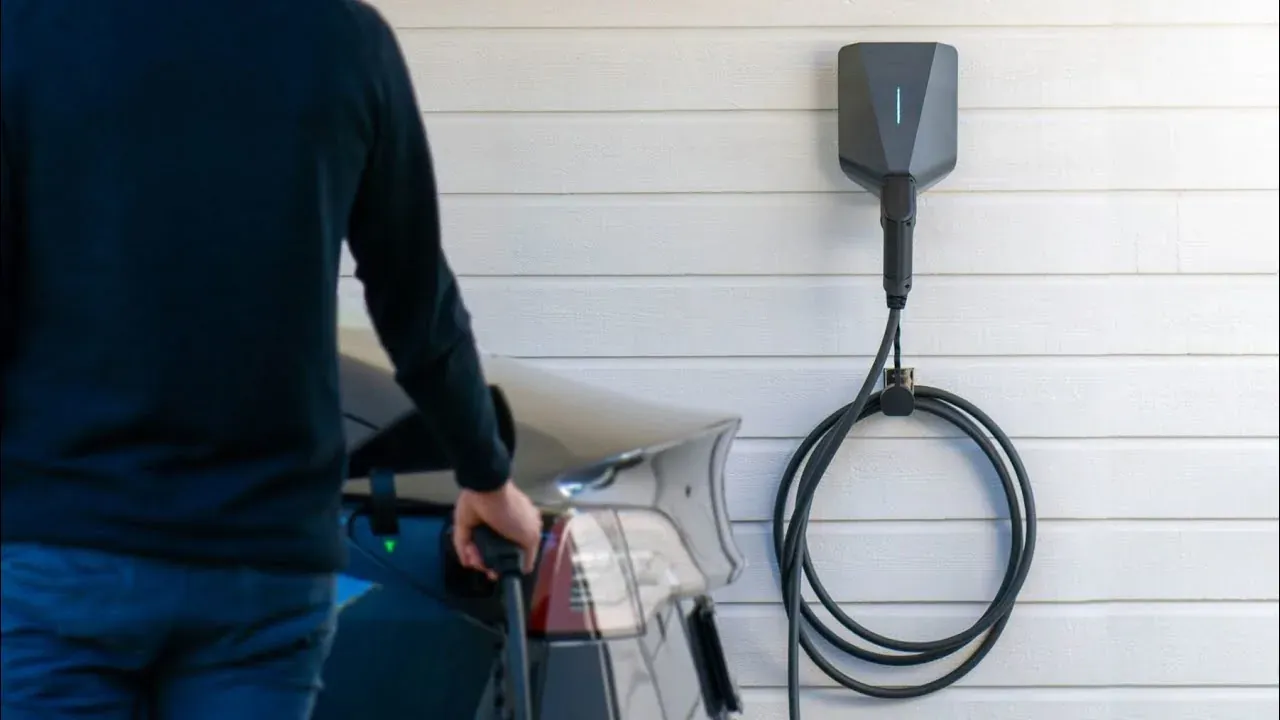
The charger gets its own breaker in the panel you have. This is common in homes with a 200 amp panel and space left over.
It watches how much power the house is using and slows the charger when the AC, dryer or oven is running. You keep your panel and still charge overnight. Some chargers can also be set to draw fewer amps.
A small or worn out panel gets replaced, or the service goes up to 200 amps. We plan the charger circuit as part of the panel upgrade.
Many older homes in neighborhoods like Duke Park were built with 60 or 100 amp service. That does not always rule out an EV charger. A load management device or a lower charger setting often makes it work, and we tell you which option fits after the load calculation.
Sizing
Most Level 2 chargers can be set to draw different amps. More amps means faster charging, but it also needs a bigger breaker and heavier wire. Here is how they line up for homes in Durham.
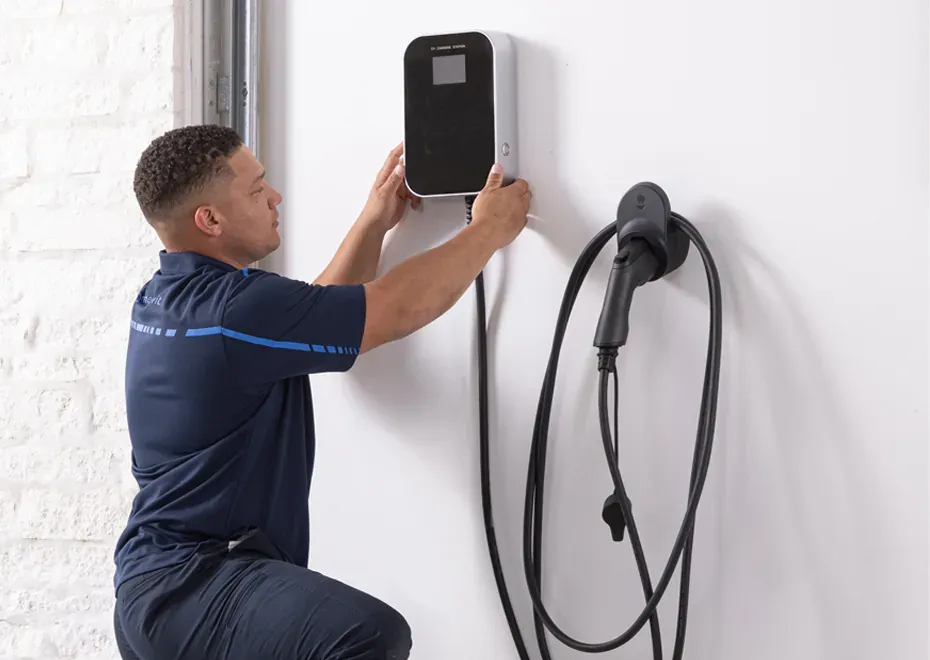
An EV charger runs for hours at a time, so the code treats it as a continuous load. The charger can only use 80 percent of the breaker. That is why a 32 amp charger needs a 40 amp breaker.
Each breaker size needs a matching wire size. Long runs, like the far side of a garage or a detached shop, can need a size heavier so the charger gets full power.
Hookup
A Level 2 charger can plug into a 240V outlet or be wired straight to its circuit. Both work. The right pick depends on the charger, how fast you want to charge and whether it may move later. A Tesla Wall Connector, for one, is made to be hardwired.
We install the one you have, from Tesla, ChargePoint, Emporia and other brands. Send us the model before the visit so we size the breaker and wire to match.
Placement
Where the charger goes changes how far the wire runs and what kind of charger fits. These are the three most common setups for homes in Durham.
The most common spot. The panel is often in the garage or on the other side of its wall, so the new circuit is short and neat.
For cars that park outside. The charger must be rated for outdoor use, and a plug-in setup needs a weatherproof in-use cover.
The wire has farther to go, so it is often a size heavier. If you want power for lights and tools out there too, a small subpanel can feed it all.
The Process
From the first look at your panel to the first charge, here is how an EV charger install goes for a home in Durham.
We do the load calculation and pick the spot where the cable reaches your charge port.
We pull the electrical permit for the new 240V circuit.
A new breaker and wire run to the charger. A load management device goes in here if needed.
The charger is mounted and set to the right amps for its breaker.
The inspector checks the work, and the charger is powered up and tested.
A new 240V circuit for an EV charger is permitted work in Durham. We pull the permit and set up the inspection. Keep the paperwork: home buyers and insurers sometimes ask whether a charger was installed with a permit.
Service Area
We are based in Durham and install EV chargers at homes all over the Triangle. Not sure if we come to your town? Call and ask.
FAQ
Not sure what your home needs? Call with your car, your charger model and where you park, and we will tell you what comes next.
Call (984) 271-2113A charger in an attached garage near the panel is usually done in one visit. A long run to a detached garage, a subpanel or a panel upgrade adds time. You get a time estimate before the work starts.
Yes. A new 240V circuit for an EV charger is permitted work. We pull the permit and set up the inspection for you.
Yes. We install the Tesla Wall Connector and other brands like ChargePoint and Emporia. The Wall Connector is made to be hardwired, and we set it to match the breaker it is on.
Not always. A load calculation tells us if your panel has room. If it is close, a load management device or a lower charger setting can often avoid an upgrade.
A regular outlet adds about 3 to 5 miles of range per hour. A Level 2 charger adds about 20 to 40, depending on the car and the charger setting. Most cars fill up overnight on Level 2.
Yes, if the charger is rated for outdoor use. We mount it where the cable reaches the car without crossing a walkway, and a plug-in setup gets a weatherproof in-use cover.