
Call Now for 24/7 Emergency Repairs(984) 271-2113
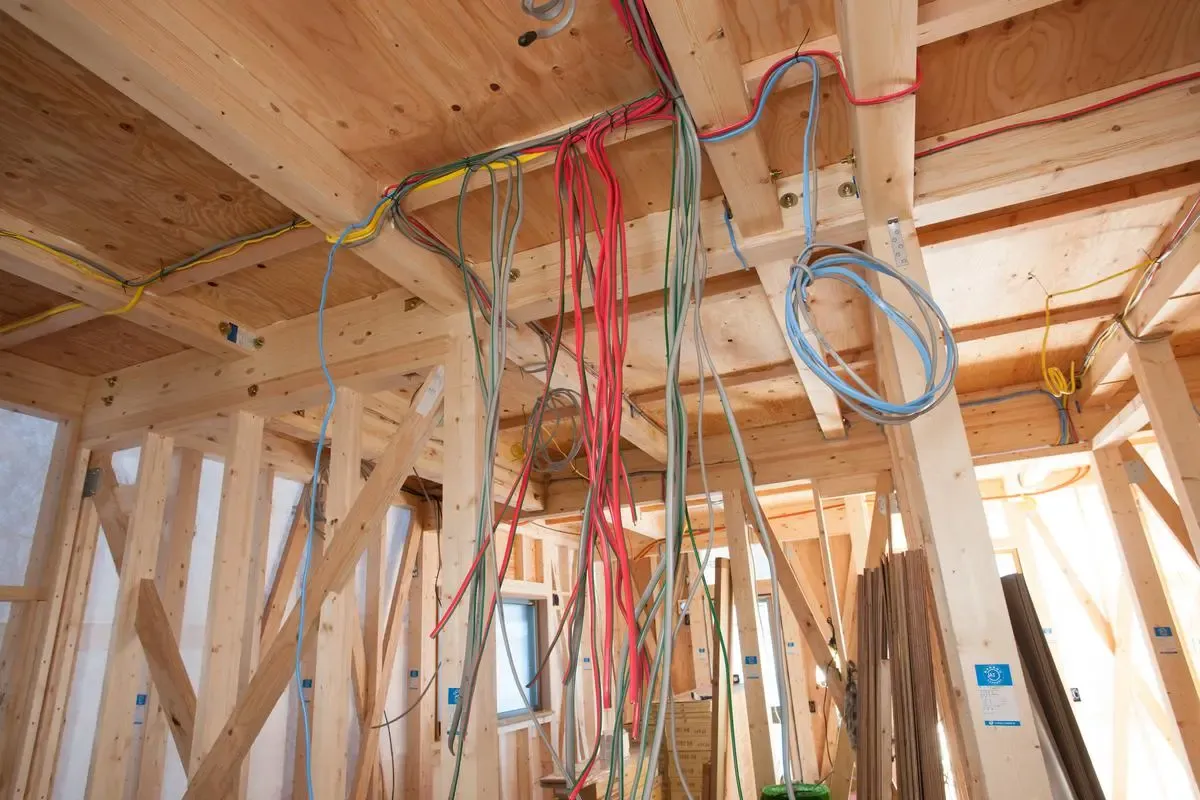
New electrical cables run through the open wood framing of a house

House Wiring and Rewiring Services Durham, NC

Living with old wiring, or planning a remodel? Brian Electric LLC rewires older homes and adds new circuits for homes in Durham and nearby towns. We find out what is in your walls first, then tell you what needs to change and what can stay.

  • Licensed in North Carolina
  • Permits and inspections handled
  • Older homes and remodels
Call Now · (984) 271-2113

Know Your Wiring

Types of House Wiring in Durham Homes

The age of your home tells us a lot. As an electrician in Durham, NC, we know many houses here were built between the 1920s and the 1970s, and some still have wiring from the day they were built. Here is how to tell what you have.

When each wiring type went into homes
  • Replace
  • Repair or update
  • Usually fine
Many Durham homes built
Knob and Tube1900s to 1950
Cloth-Covered Wire1940s to 1960s
Aluminum Branch Wiring1965 to 1974
Two-Prong Outlets With No GroundUntil the 1960s
Modern Plastic-Sheathed Cable1970s to today
01Before about 1950

Knob and Tube

How to spot it

Single wires held off the wood by white porcelain knobs, with porcelain tubes where they pass through joists. Look in the attic or the basement.

Why it matters

Has no ground. The old insulation turns brittle, and it can overheat when attic insulation is packed around it.

Usual fixReplace
021940s to 1960s

Cloth-Covered Wire

How to spot it

Cable with a woven cloth jacket, often black or gray. You may see it at an old light fixture or behind an outlet cover.

Why it matters

The rubber under the cloth dries out and cracks, most of all near the heat of light fixtures. Many runs have no ground.

Usual fixReplace
03Mid 1960s to 1970s

Aluminum Branch Wiring

How to spot it

Silver colored wire at outlets and switches. The cable jacket may be printed with "AL" or "ALUMINUM."

Why it matters

Connections loosen and overheat at outlets, switches and splices. Warm cover plates or a burning smell are warning signs.

Usual fixRepair or replace
04Common before the 1960s

Two-Prong Outlets With No Ground

How to spot it

Outlets with only two slots. Or three-slot outlets that were swapped in without a ground wire behind them.

Why it matters

No path to ground for a fault. Surge protectors and some appliances cannot protect you the way they should.

Usual fixAdd a ground or GFCI
051970s to today

Modern Plastic-Sheathed Cable

How to spot it

White, yellow or orange plastic jacket with a bare copper ground wire inside. Printed with the wire size.

Why it matters

Safe when it was installed right. Problems come from overloaded circuits or DIY splices without a box.

Usual fixUsually fine

Warning Signs

Signs Your House Needs Rewiring

Some signs mean you should call today. Others mean the wiring is old and it is time to plan. Here is how to tell the two apart in a Durham home.

Call Us Today

These can start a fire.

  • A burning or hot plastic smell near an outlet, switch or the panel
  • Outlets or switch plates that feel warm, or look brown around the edges
  • Buzzing, crackling or sparks when you plug something in
  • A small shock when you touch a switch or an appliance

Turn off that circuit at the breaker. Our emergency electrician line is open 24/7.

Call (984) 271-2113

Plan for It

Not an emergency, but worth a wiring check.

  • Your home was built before the 1960s and still has its first wiring
  • Two-prong outlets, or three-prong outlets with no ground behind them
  • Lights dim or flicker when the AC, a microwave or a hair dryer starts
  • Power strips and extension cords are the only way to reach an outlet
  • An inspector or your insurance company flagged the wiring
  • You found knob and tube or cloth wire in the attic or basement

Still on screw-in fuses? See our fuse box repair page too.

One sign is not always a rewire. A single bad outlet or one loose splice is a repair. We check the whole picture before we suggest new wiring.

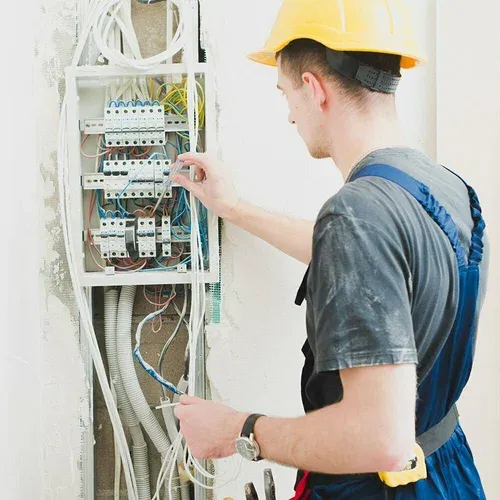
Electrician in a hard hat working on new wiring at an open breaker panel

Choosing the Scope

Full Rewire or Partial Rewire?

Not every older house in Durham needs every wire replaced, and some need a panel upgrade first. The right answer comes from three questions:

  1. What kind of wiring is in the walls now?
  2. How much of the house does it reach?
  3. What comes next: a remodel, a sale or a new panel?
Whole house

Full Rewire

All the old wiring in the house is replaced with new grounded cable. Outlets, switches and boxes are replaced along the way.

A good fit when

  • Knob and tube or cloth wire runs through most rooms
  • Your insurance company wants all of the old wiring gone
  • A big remodel already has walls open
  • The panel is being replaced at the same time

Trade-off: More openings in walls and ceilings, and more days of work.

Room by room

Partial Rewire

Only the circuits that need it get new wire. The rest of the house stays as it is. It can also be done in stages over time.

A good fit when

  • Old wiring is only in part of the house, like the original rooms
  • One problem area, like a kitchen, bathroom or bedroom wing
  • You want to spread the work and the cost over time
  • A room is being remodeled and the rest is in good shape

Trade-off: Any old wiring left in place still needs to be watched.

Remodels and New Circuits

New Wiring for Remodels, Additions and New Circuits

Not all wiring work starts with a problem. Planning a remodel or adding space to a Durham home? Bring us in early, before the walls close, and the wiring goes in where you want it.

Kitchen and Bath

Kitchen and Bathroom Remodels

Today’s code asks for more than an old kitchen has. Countertops need GFCI outlets on at least two 20 amp circuits. A bathroom needs its own 20 amp circuit with GFCI protection.

  • 20 amp circuits
  • GFCI outlets
  • Under-cabinet lights
New Space

Additions, Basements and Attics

New living space needs its own circuits, not a tap off an old one. We plan the outlets, lights and switches with you, and the permit covers it all.

  • New circuits
  • AFCI protection
  • Permit and inspection
Garage and Laundry

Dedicated Circuits for Big Appliances

An electric range, dryer, water heater, heat pump or hot tub needs a circuit of its own. Many run on 240 volts.

  • 240 volt
  • Panel check
Office and Patio

More Outlets Where You Need Them

Home offices, TV walls, patios and garages. A new outlet is safer than an extension cord across the floor.

  • Outdoor GFCI
  • USB outlets

The Process

How a Rewire Goes, Room by Room

The biggest worry we hear is "Will you tear out my walls?" Most of the time, no. New wire goes in through the attic and the crawl space, with a few small openings where it has to turn a corner.

Drawing of a wall with new wire run from the attic and the crawl space through small openings to a switch and an outletAtticCrawl spaceSmall openingSmall openingSwitchOutlet
New wireSmall opening
  1. Wiring checkWe open a few boxes and look in the attic, the crawl space and the panel to see what is there.
  2. Plan and priceYou get a written plan: which circuits change, where the openings go and how long it should take.
  3. PermitWe pull the electrical permit before any wire is run.
  4. New wire inNew cable is fished through the walls from the attic or crawl space. Old wire is cut off and left dead where it cannot be pulled out.
  5. Rough-in inspectionThe inspector checks the new wiring while it can still be seen.
  6. Power upNew outlets and switches go in, every circuit is tested, and the final inspection is booked.

Living at Home During the Work

Most families stay home during a rewire. The work goes circuit by circuit, so only part of the house is off at a time. Plan for some noise and dust, and clear the space along the walls in the rooms on that day's list.

Plaster Walls in Older Durham Homes

Plaster and lath is harder to work with than drywall. It cracks if it is cut the wrong way, so openings are kept few and made with care. We often route wire through closets, the attic and the crawl space instead.

Read more about older homes in Duke Park and Hayti.

Paperwork

Permits, Inspections and Your Home Insurance

Rewiring in Durham is permitted work. The permit protects you: an inspector checks the wiring, and you get a record that it was done to code.

Electrical PermitHandled for you
Work
Rewiring, new circuits, remodel wiring
Pulled by
Brian Electric LLC
Inspection 1
Rough-in, before the walls close
Inspection 2
Final, once power is on

Why the Permit Matters

An inspector looks at the wire, the boxes and the breakers. When you sell, buyers and their home inspectors often ask for proof that wiring work was permitted.

What Insurers Often Ask About

  • Knob and tubeSome insurers will not write a new policy until it is gone. Others charge more.
  • Aluminum branch wiringOften asked about on applications. Repairs at each connection may be enough for some insurers.
  • Fuse boxes and old panelsScrew-in fuses and some older panel brands get flagged on inspections.
  • Ungrounded outletsTwo-prong outlets often show up on a home inspection report when you buy or sell.

Keep your paperwork. After a rewire, save the permit number and the final inspection. Send a copy to your insurance agent and keep one for when you sell.

Customer Reviews

What Customers Say About Our Work

5.0

Read Our Google Reviews
  • Forrest B.Google review

    My wife and I can't say enough about Brian Electric. This was our third time hiring Brian to help with renovations. His work is exceptional and we are very impressed with his knowledge/quality of his work. We will definitely hire him again in the future!!

  • Bridget D.Google review

    Brian was amazing. He was able to come the same day I called. He was able to quickly diagnose and fix the problem. He was very informative and answered all of my questions. I will definitely recommend and will be using his services again.

  • Robert P.Google review

    Brian installed a Kitchen Light fixture over my Kitchen Island. He arrived on time, was very professional and had the experience and know-how to install what I would consider a difficult installation in a short amount of time.

  • Jackie V.Google review

    If I could give 10 stars I would. He was so helpful with my major project, and really looked out for my best interests. He even took on a spontaneous smaller project that popped up as he was finishing the larger one!

  • Robin L.Google review

    He came and installed a new light above our kitchen sink. Excellent work, prompt service and a truly good guy. What more could you ask for? We will definately call Brian for any work we may need in the future. I would highly recommend him to anyone in need of quality electrical work!

  • Barbara M.Google review

    Brian traced down our light and receptical outage. He made the repair in under an hour and had our home in working order again.

  • De K.Google review

    I cannot say enough good things about Brian Electric. He's corrected other marginal work and has completed all sorts of jobs in the past with excellent craftsmanship. I only wish there was more of Brian to go around!

  • Martin M.Google review

    Brian Electric has provided us with quality, on-time service for all of our electrical needs in the house we moved into a year ago.

  • Robby C.Google review

    Super professional! Great quality work with attention to detail. Highly recommend. This is my new go to electrical contractor!

  • Brandon S.Google review

    On time, professional and excellent quality work. Brian Electric is one of the best electricians we've worked with.

Service Area

House Rewiring in Durham and the Triangle

We are based in Durham and rewire homes all over the Triangle. Not sure if we come to your town? Call and ask.

Neighborhoods We Serve

View All Service Areas

FAQ

House Wiring FAQs

Not sure what is in your walls? Call and tell us the age of your home, and we will tell you what to check first.

Call (984) 271-2113

Does an older house always need a full rewire?

No. It depends on what kind of wiring is in the walls and how much of the house it reaches. Sometimes only the original rooms or one problem circuit need new wire. We check first and tell you what can stay.

Can you rewire a house without tearing out the walls?

Most of the time, yes. New wire is fished through the walls from the attic and the crawl space. Small openings are made where the wire has to turn a corner or pass a beam.

How long does it take to rewire a house?

It depends on the size of the house and how many circuits change. A few circuits can be a short job. A whole house takes longer, plus time for the inspections. You get a time estimate with the price.

Can we stay in the house during a rewire?

Most families do. The work goes circuit by circuit, so only part of the house is without power at a time. Expect some noise and dust in the rooms being worked on.

Do I need a panel upgrade when I rewire?

Not always. If your panel has room and is in good shape, the new circuits can go into it. A fuse box, a full panel or a panel too small for your home usually gets replaced at the same time.

Is knob and tube wiring illegal in North Carolina?

No law makes you tear out knob and tube that is already in a house. But it should not be extended or buried in attic insulation, and many insurance companies will not cover a home that still has it.

Will rewiring help with my home insurance?

Often, yes. Old wiring is one of the things insurers ask about. After a rewire, send your agent the permit and the final inspection, and ask if your rate or coverage can change.

Call 24/7: (984) 271-2113