
When the power is out in part of the house but no breaker looks tripped, the cause is usually one of five things. A GFCI outlet in another room has tripped, a breaker has tripped without moving far, a wall switch controls the outlets, a loose connection has cut the circuit, or your home has lost half of its power from the utility. The first three you can often check yourself in a few minutes. The last two need an electrician or Duke Energy.
If you smell burning, hear buzzing or crackling, or see lights getting very bright and then dim, stop here. Turn nothing on, stay away from the panel and call an electrician. Call 911 if there is smoke or fire.
Start Here: Is the Problem Inside Your Home or Outside?
Before you check anything in the house, look outside.
- Are your neighbors’ lights out too? Then it is most likely a utility outage. Check Duke Energy’s outage map or call them to report it.
- Do some of your lights work but others do not? Then the problem is more likely inside your home, or in the service line to your house.
- Are some lights dim and others oddly bright? Treat this as urgent. It can mean a loose neutral connection, which can damage electronics and cause overheating. Turn off sensitive electronics if it is safe and call right away.
5 Common Causes When Power Is Out but No Breaker Tripped
1. A Tripped GFCI Outlet in Another Room
This is the most common cause, and the easiest to fix. A GFCI outlet has TEST and RESET buttons. One GFCI can protect other regular outlets further along the same circuit. When it trips, every outlet after it goes dead too, even in another room.
That is why a dead outlet in a bathroom can trace back to a GFCI in a different bathroom. A dead garage or porch outlet can trace back to a GFCI in the garage, basement or outside wall.
Check every GFCI outlet in these areas:
- Bathrooms
- Kitchen counters
- Garage
- Basement and crawl space
- Laundry room
- Outdoor outlets and porches
Press RESET firmly on each one. If power comes back, you found it. If a GFCI trips again right away, or will not reset at all, there may be a fault on the circuit or the GFCI may be worn out. Leave it off and have it checked. Moisture is a common trigger, so outdoor GFCIs often trip after heavy rain.
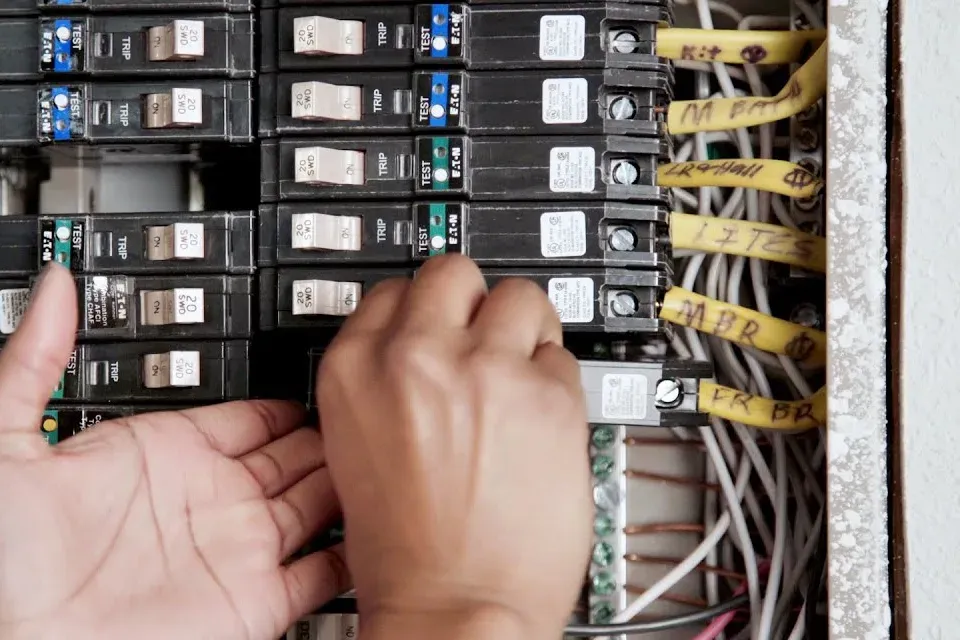
2. A Breaker That Tripped but Looks On
A tripped breaker does not always flip all the way to OFF. Many stop in the middle, which can look almost the same as ON in a dim basement. AFCI and GFCI breakers in the panel can also trip with only a small change in the handle. Some have a colored indicator that pops out when they trip.
To check, look closely at each breaker in good light. If one handle sits slightly out of line with the others, push it firmly to OFF, then back to ON.
Only do this if the panel is dry and cool, with no burning smell, buzzing or scorch marks. Never remove the panel cover.
If the breaker trips again, leave it off. A breaker that will not stay on is pointing to a problem on that circuit, and the timing of each trip says a lot about why a breaker keeps tripping.
3. A Wall Switch Controls the Outlet
In many homes, one wall switch controls an outlet instead of a ceiling light. This is common in living rooms and bedrooms built to have a lamp plugged into that outlet. If the switch is off, the outlet is dead, and it looks like a power problem.
Flip the switches near the doorway and see if the outlet comes back. Often only the top or bottom half of the outlet is switched.
4. A Loose or Failed Connection
If no GFCI or breaker is tripped and no switch explains it, a loose connection is the most likely cause. Outlets on a circuit are linked one after another. When a wire comes loose at one outlet, every outlet after it can lose power, while the breaker stays on.
Loose connections often happen at worn outlets, at push-in connections on the back of an outlet, or inside a junction box. They can also happen inside the panel itself.
A loose connection is not just an inconvenience. A connection that is only partly broken can arc and overheat. Warning signs include an outlet that was warm or flickering before it went dead, a burning or fishy smell, or brown marks on a cover plate.
Do not open outlets or junction boxes to look for it. This is a job for an electrician, who can test the circuit and find the break. Fixing it is part of routine electrical repair.
5. Lost Power on One Leg of Your Service
Homes in the US get power on two hot lines, often called legs. Each leg feeds about half of the circuits in your panel. Large appliances, like an electric dryer, range, water heater or heat pump, use both legs.
If one leg is lost, about half the house goes dark while the other half still works. Large appliances may run weakly or not at all. The cause can be a problem with the utility’s lines, the meter or the service wires to your house, or a failing main breaker or connection inside the panel.
Signs of a lost leg:
- About half the rooms are dead, often spread across the house
- No single breaker is tripped
- The dryer, range or HVAC acts strangely or will not start
- Neighbors still have full power
Call Duke Energy first to report a partial outage. If they find no problem on their side, the fault is in your service equipment or panel, and you need an electrician. Do not try to fix it yourself. These parts carry power even when your main breaker is off.
Quick Guide: What You Are Seeing and What to Do
| What You Notice | Likely Cause | What to Do |
|---|---|---|
| Neighbors are out too | Utility outage | Report it to Duke Energy |
| Dead outlets in a bathroom, kitchen, garage or outside | Tripped GFCI | Find and reset the GFCI |
| One breaker is slightly out of line | Tripped breaker | Push it to OFF, then ON, once |
| One outlet dead, lamp plugged in | Switched outlet | Flip the nearby wall switches |
| Several outlets dead, nothing tripped | Loose connection | Call an electrician |
| About half the house dead, big appliances acting up | Lost leg of service | Call Duke Energy, then an electrician |
| Lights very bright and very dim | Loose neutral | Call an electrician right away |
What You Can Safely Check Yourself
These checks are safe for most homeowners. None of them involve opening anything.
- Look outside and ask a neighbor if their power is on.
- Reset every GFCI outlet in the house, starting with bathrooms, kitchen, garage and outdoors.
- Check each breaker in good light. Reset one that looks out of line, once.
- Flip the wall switches near any dead outlet.
- Unplug anything on the dead outlets before power comes back, so a faulty appliance does not cause the problem again.
Stop and call an electrician if:
- A GFCI or breaker trips again right after a reset
- Nothing on this list brings the power back
- You smell burning or see scorch marks
- Lights flicker, dim or get unusually bright
- Half the house is out and Duke Energy finds no problem on their side
Is a Partial Power Outage an Emergency?
It depends on what you notice. A dead outlet that comes back with a GFCI reset is not an emergency. A partial outage with a burning smell, buzzing, flickering or uneven lights is. So is losing half the house in winter, when your heat may not run.
If you are not sure, call. Our emergency electrician line is open 24/7, with no extra charge for nights or weekends. We can tell you over the phone whether it is safe to wait.
What an Electrician Checks
When you call, an electrician will usually:
- Confirm which circuits are dead and test the voltage on both legs at the panel.
- Check the main breaker and the connections where the service wires enter the panel.
- Test the dead circuits to find where the power stops.
- Repair the loose connection, replace the failed outlet, GFCI or breaker, and check nearby wiring for heat damage.
- Test the circuit before leaving.
If the problem is an old or damaged panel, the lasting fix may be breaker repair and replacement or a full electrical panel upgrade. Homes with worn or ungrounded wiring may also need outlet and switch repair on the affected circuits.
Frequently Asked Questions
Why Did Half My House Lose Power?
Most often it is a lost leg of your electrical service. The cause can be on the utility side, at the meter, or at the main breaker and connections in your panel. Report it to Duke Energy first. If the problem is not on their side, call an electrician.
Why Do I Have Power in Some Outlets but Not Others in the Same Room?
The outlets may be on different circuits, one may be controlled by a wall switch, or a tripped GFCI elsewhere may be cutting power to some of them. If none of those explain it, a loose connection at one outlet can cut power to the outlets after it.
Can a Breaker Be Bad Without Tripping?
Yes. A worn breaker can stop passing power while its handle still shows ON. It may also feel warm or look discolored. Testing it means working inside the panel, so leave that to a licensed electrician.
How Do I Find a GFCI That Tripped?
Look for outlets with TEST and RESET buttons in bathrooms, the kitchen, the garage, the basement, the laundry room and outside. Press RESET on each one. Some homes also have GFCI breakers in the panel, marked with a TEST button.
Why Did My Lights Dim When Part of the House Lost Power?
Dimming or very bright lights during a partial outage can point to a loose neutral or a problem with your service. That can damage electronics and overheat wiring. Turn off sensitive electronics if it is safe and call an electrician right away.
Get Help With a Partial Power Outage in Durham
If part of your Durham home has lost power and the simple checks did not bring it back, Brian Electric can find the cause and fix it. We are a licensed electrician in Durham, NC, our line is open 24/7, and you get the price before any repair starts.