
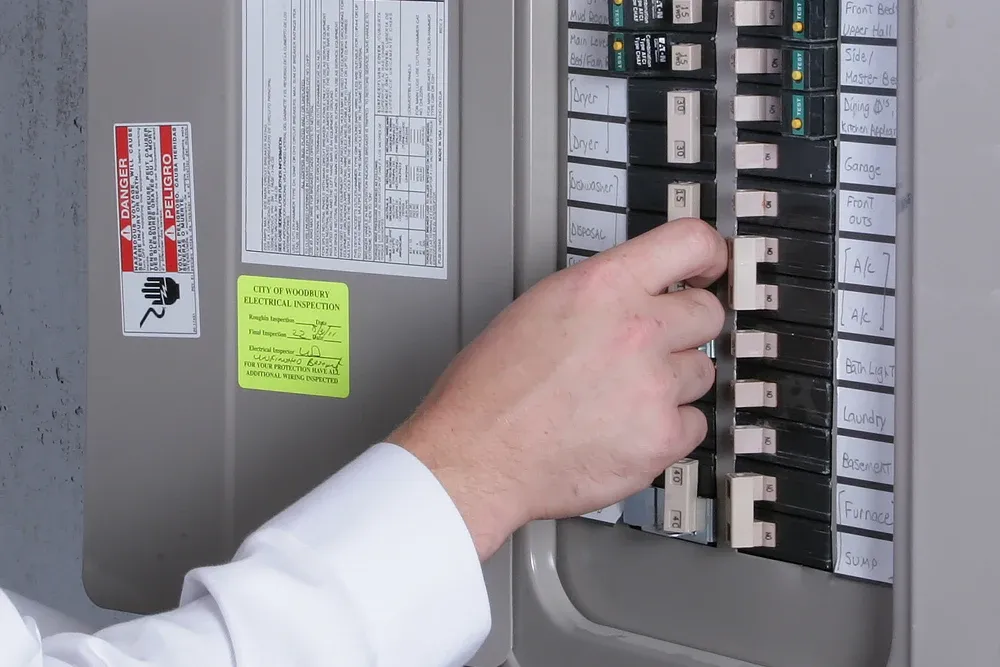
A circuit breaker keeps tripping because it is detecting a condition it was built to stop. The usual reasons are an overloaded circuit, a short circuit, a ground fault, a faulty appliance or damaged wiring, or a breaker that is wearing out. One trip after running a space heater and a hair dryer together is rarely a concern. A breaker that trips again and again is a warning you should not ignore.
If you see smoke, sparks or fire, or smell burning near the panel, do not touch it. Get everyone away from the area and call 911 if there is fire or smoke.
Why Does a Circuit Breaker Keep Tripping?
Each circuit in your home uses wire sized to carry a certain amount of current, and its breaker is matched to that wire. When more current flows than the wire can handle, the wire heats up. The breaker switches off before that heat can damage the insulation or start a fire.
Most household breakers react to overcurrent in two ways. A modest overload heats a part inside the breaker slowly, so it trips after a delay. A short circuit sends a sudden surge, so it trips almost instantly.
Some devices add more protection. A GFCI (ground-fault circuit interrupter) cuts power when current leaks out of its normal path. An AFCI (arc-fault circuit interrupter) cuts power when it detects arcing. A standard breaker does neither, so a GFCI or AFCI can trip even when the circuit is not overloaded. Which device trips, and when, both offer clues.
6 Common Causes of a Breaker That Keeps Tripping
1. Overloaded Electrical Circuit
An overload means the appliances on one circuit are drawing more current than it is rated for. Nothing is broken. Too much is running at once.
Heat-producing appliances are the usual culprits: space heaters, hair dryers, toasters and microwaves. A typical case is a bathroom where a hair dryer and a space heater share a circuit. Each works alone. Together, the breaker trips a minute or two later.
The NFPA electrical safety tip sheet (shared by the Kentucky State Fire Marshal) recommends only one heat-producing appliance per outlet at a time. If a room trips its breaker often, an electrician can check how the circuit is loaded and whether a dedicated circuit makes sense.
2. Short Circuit in Wiring or Appliances
A short circuit happens when a hot wire touches a neutral or another conductor, and current takes a path with almost no resistance. The current spikes in a fraction of a second, so the breaker trips immediately, sometimes with a pop.
Shorts can start in an appliance, a cord, an outlet or wiring inside a wall, often from loose connections, worn insulation or a nail driven through a cable.
You may see a scorch mark on an outlet, smell something burnt, or notice the breaker tripping the instant you plug something in. Do not touch anything that looks scorched. A short that keeps coming back needs an electrician, because the damage is often hidden.
3. Ground Faults and Moisture Problems
A ground fault is a type of short where current escapes to ground, through a metal box, a wet surface or a person. It is a serious shock risk, especially near water.
GFCI protection catches small current leaks that a standard breaker would not notice. That is why it is common in kitchens, bathrooms, laundry rooms, garages and outdoor outlets, the same areas the NFPA tip sheet lists.
Moisture is a frequent trigger. An outdoor outlet may trip after a storm, or a bathroom outlet after a steamy shower. If a GFCI trips once after rain, let the area dry before resetting it. If it keeps tripping or will not reset, the fault may be in the device, an appliance or the wiring, and it should be checked.
4. Arc Faults Detected by AFCI Breakers
An arc fault is a small, repeating spark where electricity jumps across a gap, such as a loose connection, a damaged wire in a wall or a worn cord. Arcing creates heat and can ignite nearby material, even when the current is too low to trip a standard breaker.
AFCI breakers watch for that pattern and shut the circuit off. They usually have a TEST button on the face, which helps you spot them in the panel.
An AFCI trip may point to a wiring problem, an appliance or a faulty breaker. Because the source can be hard to find, repeated AFCI trips are a reason to call an electrician.
5. Faulty Appliances or Damaged Cords
Sometimes the circuit is fine and one appliance is not. A failing motor, worn internal wiring or a damaged cord can cause an overload, a short or a ground fault when that appliance runs.
The pattern is the clue. If the breaker trips only when the vacuum starts or an old freezer cycles on, that appliance is the likely cause. Stop using any appliance with a cracked, frayed or melted cord, and have it repaired by a qualified service or replaced.
6. Worn-Out or Defective Circuit Breaker
Breakers are mechanical, and they wear out. One that has tripped many times, or was damaged by heat, can start tripping with very little running. Some will not stay on at all.
Warning signs include trips under a light load, a breaker that feels warm from the outside, or a handle that will not latch. A failing breaker is hard to tell apart from a wiring fault without testing. Replacing one means working inside the panel, so it is a job for a licensed electrician who can confirm the new breaker is compatible with your panel.
What Does the Timing of a Breaker Trip Tell You?
Timing can narrow the possibilities, but it cannot prove the cause. More than one problem can exist at once. Treat it as information to share with your electrician.
Breaker Trips Immediately
Tripping the instant you reset it or plug something in points to a short, a ground fault or a failed breaker. Leave it off.
Breaker Trips After a Few Minutes
A delay usually means an overload. Running fewer high-power appliances at once often solves it. If it still trips with a light load, have it checked.
Breaker Trips When a Specific Appliance Runs
When trips line up with one appliance, that appliance either has a fault or needs more power than the circuit can share.
Breaker Trips With Nothing Plugged In
Hardwired lights, fans and appliances may still be on the circuit. If those are off too, a wiring fault or failing breaker is likely.
| Breaker Behavior | Possible Causes | Recommended Safe Response |
|---|---|---|
| Trips the moment you reset it | Short circuit, ground fault or failed breaker | Leave it off and call an electrician |
| Trips after a few minutes of heavy use | Overloaded circuit | Run fewer appliances at once and watch the pattern |
| Trips when one appliance runs | Faulty appliance or a circuit that cannot share the load | Stop using that appliance and have it checked |
| Trips with nothing plugged in | Wiring fault, hardwired load or failing breaker | Leave it off and call an electrician |
| GFCI trips near water or after rain | Moisture or a ground fault | Let it dry, then call if it keeps tripping |
What Can You Safely Check When a Breaker Trips?
These checks are about observing, not repairing. None of them involve opening equipment or touching wiring.
Check for Warning Signs Before Approaching the Panel
From a safe distance, look and listen. Do you smell burning or hot plastic? Hear buzzing or crackling? See water, scorch marks, melted plastic or smoke? If so, do not touch the panel or reset anything. Keep people away and call an electrician, or 911 if there is smoke or fire.
Unplug Appliances on the Affected Circuit
If nothing looks dangerous, note which lights, outlets and appliances lost power. That tells you which circuit tripped. Turn off or unplug devices on that circuit, but only if their cords and outlets look undamaged and feel cool.
Check Whether the Breaker Can Be Safely Reset Once
A single reset is reasonable only when there are no warning signs and the panel is dry and undamaged. Follow any instructions printed on the panel door. Push the handle firmly to OFF, then back to ON. If it trips right away, leave it off.
Never open the panel cover, open an outlet box, replace a breaker yourself, hold or tape a breaker on, or install a larger breaker. A bigger breaker lets the wire overheat before it shuts off.
Observe When the Breaker Trips Again
If the reset holds, plug things back in one at a time. Write down what was running and the time of any new trip. That record is one of the most useful things you can give an electrician.
When Should You Call an Electrician for a Tripping Breaker?
Call right away, and do not reset the breaker, if you notice a burning smell, buzzing or crackling, scorch marks or discoloration, an outlet or breaker that feels hot, water near electrical equipment, or a breaker that trips again the moment you reset it. These can mean overheating, arcing or a short. Our emergency electrician line is open 24/7 for situations like these.
Schedule a visit soon if the same breaker trips every week, a breaker will not stay on, several circuits act strangely, lights flicker when appliances start, or an outlet or cord looks damaged. These are not always emergencies, but they rarely fix themselves.
Can a Tripping Breaker Mean Your Electrical Panel Needs an Upgrade?
Sometimes, but rarely on its own. One circuit that keeps tripping usually has a problem with that circuit: an overload, a fault or a heavy appliance that needs its own circuit.
An upgrade comes up when the whole home needs more power than its service can supply, or when the panel is old, damaged or full. An electrician will review how circuits are loaded, the panel’s capacity and condition, breaker compatibility and any new loads like an EV charger or heat pump. If your home has outgrown its system, an electrical panel upgrade may be the lasting fix. Homes that still use screw-in fuses may need fuse box repair or replacement.
How Can You Prevent Circuit Breakers From Tripping?
Not every trip can or should be prevented. A breaker that trips during a real fault is doing its job. You can cut down on trips caused by habits:
- Spread high-power appliances across different circuits.
- Use one heat-producing appliance per outlet at a time.
- Do not overload or chain power strips, and treat extension cords as temporary.
- Follow appliance instructions, especially for large appliances that call for their own circuit.
- Test GFCI and AFCI devices monthly, as the NFPA tip sheet recommends.
- Ask an electrician about a dedicated circuit for a space heater, freezer or shop tool you use often.
Frequently Asked Questions
Is It Dangerous if My Breaker Keeps Tripping?
It can be. The trip is the breaker protecting you, but repeated trips mean something keeps causing an unsafe condition, such as an overload, a short or a ground fault. Find the cause rather than living with it.
Why Does My Breaker Trip With Nothing Plugged In?
Hardwired lights, fans or appliances may still be on that circuit. If everything is off and it still trips, a short or ground fault in the wiring, or a failing breaker, is likely. Leave it off and call an electrician.
Why Does My Breaker Keep Tripping at Night?
Night trips often match loads that run then, like space heaters, electric blankets, a heat pump or a freezer cycling on. Note what was running when it tripped and share that with your electrician.
Can a Circuit Breaker Go Bad?
Yes. Breakers wear out from age, heat and repeated trips. A bad one may trip under a light load, feel warm or refuse to stay on. Replacing it means working in the panel, so leave it to a licensed electrician.
Should I Keep Resetting a Tripping Breaker?
No. One careful reset is fine when there are no warning signs. Resetting again and again can let wiring overheat and does nothing to fix the cause.
Get Professional Help With a Breaker That Keeps Tripping
If a breaker in your Durham home keeps shutting off, Brian Electric can trace the cause, explain it in plain words and give you the price before any repair starts. Contact us or call to set up a visit.