
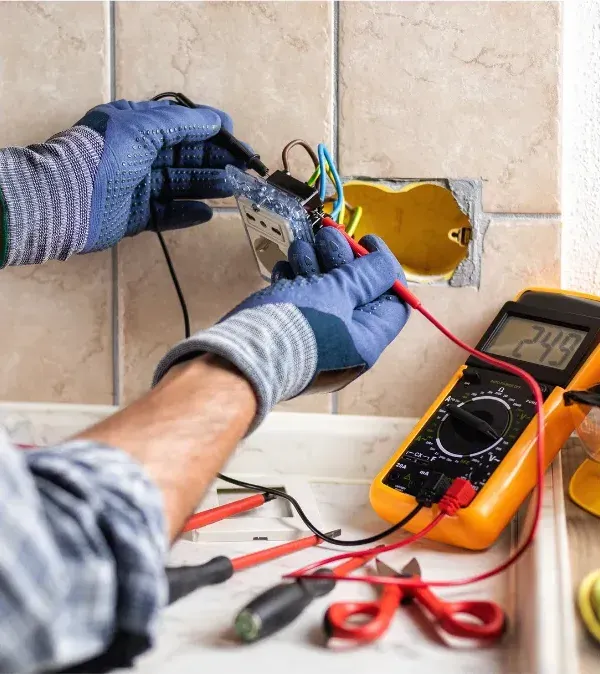
A burning smell from an outlet, switch or electrical panel almost always means something is overheating. The usual causes are a loose wire, a worn outlet or switch, an overloaded circuit or a failing breaker. That heat can melt insulation and start a fire inside a wall, where you cannot see it. Treat the smell as urgent, even if it fades.
If you see smoke or flames, get everyone out and call 911. Never throw water on an electrical fire.
What Does an Electrical Burning Smell Smell Like?
Not every burning smell in a house is electrical. Knowing what you are smelling helps you find the source faster.
- Hot plastic or burning rubber. This is the classic sign of wire insulation, a plug or an outlet body getting too hot.
- A fishy smell. Many outlets, switches and breakers are made with plastics that give off a fishy odor when they overheat. People often blame the trash or a drain first.
- A sharp, clean smell, like the air after a thunderstorm. That can be ozone, which forms when electricity arcs across a gap.
- Burning dust. The first time the heat runs each fall, dust on the heating parts burns off. It comes from the vents and fades within an hour or so.
Electrical Smell or Something Else?
| What You Smell | Likely Source | What to Do |
|---|---|---|
| Hot plastic near an outlet or switch | Loose connection or worn device | Stop using it, turn off the breaker, call an electrician |
| Fishy smell with no food or trash nearby | Overheating outlet, switch or breaker | Find the warm spot, turn off that circuit, call |
| Burning smell at the panel | Loose connection or failing breaker | Stay away from the panel and call right away |
| Burning dust from vents when the heat starts | Dust on heating parts | Usually normal if it fades. Call if it does not |
| Smell from one appliance | Motor, cord or internal fault | Unplug it if the plug and cord are cool, then stop using it |
Where Is the Burning Smell Coming From?
Walk the room slowly and use your nose and your eyes. Do not put your hand on anything that might be hot. Hold the back of your hand near a cover plate instead, without touching it.
A Burning Smell From an Outlet
Outlets are the most common source. Over time, the metal contacts inside wear out and stop gripping the plug tightly. A loose grip means a poor connection, and a poor connection makes heat.
Loose wires behind the outlet do the same thing. So do push-in connections, where the wire is pushed into a hole on the back of the outlet instead of wrapped around a screw. Heavy loads, like a space heater running for hours, make all of these worse.
Signs to look for:
- A cover plate that feels warm
- Brown or black marks around the slots
- A plug with melted or darkened prongs
- Plugs that fall out with almost no pull
A worn or scorched outlet needs to be replaced, and the wires behind it checked for heat damage. That is routine outlet and switch repair, but it should not wait.
A Burning Smell From a Light Switch or Dimmer
A dimmer can feel slightly warm in normal use. It should never feel hot. A dimmer that runs more watts of lighting than it is rated for will overheat. Loose wires at a switch cause the same problem as at an outlet.
If a switch is hot, buzzing or smells, turn it off, turn off its breaker if you can do that safely, and have it replaced.
A Burning Smell From the Electrical Panel
This is the most serious source. A panel feeds every circuit in the house, and a fault inside it can be large.
Common causes include a breaker that is failing, a loose connection where a wire meets a breaker, and corroded or damaged parts. Some older panels, including Federal Pacific Stab-Lok and Zinsco, have a record of breakers that may not trip when they should. Homes with aluminum branch wiring from the 1960s and 1970s can also have connections that loosen and heat up over time.
Do not open the panel cover, and do not flip breakers if the smell is coming from the panel itself. Call an electrician. A failing breaker is a job for breaker repair and replacement, and an old or damaged panel may need an electrical panel upgrade.
A Burning Smell From a Light Fixture
Most fixtures list a maximum bulb wattage near the socket. A bulb above that limit cooks the socket and the wires above it. This is common in older fixtures that still have incandescent bulbs. Switching to LED bulbs cuts the heat a lot.
If you see a browned socket, brittle wires or a smell when the light is on, leave it off and have the fixture replaced. New light fixture installation also lets an electrician check the box and wiring in the ceiling.
A Burning Smell From an Appliance or Cord
Sometimes the problem is the appliance, not your wiring. A failing motor, a damaged cord or a worn plug can overheat. If the plug and cord feel cool and look normal, unplug the appliance and stop using it. If the outlet is also warm or scorched, both need attention.
A Burning Smell With No Clear Source
A smell that hangs in a room with no warm outlet or switch can come from wiring inside a wall, a hidden junction box or a fixture in the ceiling. This is harder to track down and should not be ignored.
Older Durham homes have their own risks here. Many houses built before 1950 still have cloth-covered wiring or knob and tube wiring, and some have splices made by past owners. When the source stays hidden, an electrician can trace the circuit, and a home with worn wiring may need house wiring and rewiring.
What to Do Right Now
Follow these steps in order.
- Smoke, flames or sparks that will not stop? Get everyone out of the house and call 911 from outside.
- Stop using the outlet, switch or fixture. Only unplug something if the plug and outlet are not hot, melted or sparking.
- Turn off the breaker for that circuit. Do this only if the panel is dry, cool and is not the source of the smell. If you cannot tell which breaker it is, and the panel is safe to reach, turn off the main breaker.
- Do not reset a breaker that tripped along with the smell. It shut off for a reason.
- Call an electrician now. A burning smell is a reason to call a 24/7 emergency electrician, not to wait for a weekday.
- Keep the area clear while you wait. Keep kids and pets away, and know where your fire extinguisher is. An extinguisher marked for Class C fires is rated for electrical fires.
What Not to Do
- Do not spray water on an outlet, panel or anything that is sparking.
- Do not open an outlet, switch or panel cover to look inside.
- Do not keep resetting a breaker that trips.
- Do not go back to using the outlet once the smell fades. The heat damage is still there.
- Do not cover a scorched outlet with tape or furniture and forget about it.
Is a Burning Smell From an Outlet an Emergency?
Yes. Treat it as one. A connection that runs hot tends to get worse. Heat damages the metal, the damaged metal makes a worse connection, and a worse connection makes more heat. The smell is often the only warning you get before a fire.
The NFPA electrical safety tip sheet (shared by the Kentucky State Fire Marshal) lists discolored or warm wall outlets, sparks from an outlet and a burning or rubbery smell coming from an appliance among the reasons to call a qualified electrician.
Can it wait until morning? Only if the breaker for that circuit is off, the smell is gone, nothing feels warm and you leave that circuit off all night. Even then, call first thing in the morning. If the smell is coming from the panel, or you cannot shut the circuit off, call now.
What an Electrician Does When You Call
Knowing what to expect makes the call less stressful.
- Make it safe. The electrician shuts off power to the problem area and checks that nothing is still heating up.
- Find the source. They open the outlet, switch, fixture or panel and look for melted parts, loose wires and heat damage.
- Explain the cause and the price. You hear what failed and what the repair costs before work starts.
- Fix the cause. That might mean a new outlet, switch, breaker or fixture. Heat-damaged wire is cut back to clean copper or replaced.
- Test the circuit. The repair is tested under load before the power stays on.
If the damage goes beyond one device, the electrician may suggest more work, such as replacing old wiring on that circuit or upgrading a worn panel.
When the breaker trips at the same time as the smell, the cause is often one of the faults behind a breaker that keeps tripping, such as a short or a loose connection.
How to Prevent Outlets and Wiring From Overheating
Most overheating comes from wear and habits you can change.
- Plug only one heat-producing appliance into an outlet at a time, such as a space heater, hair dryer or toaster.
- Replace outlets that no longer hold a plug firmly.
- Use bulbs at or below the wattage listed on each fixture.
- Keep cords out from under rugs and furniture, where heat cannot escape.
- Use extension cords for short-term needs only, not as permanent wiring.
- Make sure dimmers are rated for the lights they control.
- Test GFCI and AFCI devices once a month, using the TEST button.
- Have an older home’s wiring checked before you add big loads like an EV charger or a heat pump.
- Keep smoke alarms working on every level of the home.
Frequently Asked Questions
Why Does My Outlet Smell Like Burning When Nothing Is Plugged In?
The heat is likely coming from a loose wire or connection behind the outlet, or from another device on the same circuit. Outlets can pass power through to other outlets down the line, so a bad connection can heat up even when nothing is plugged into that one. Turn off the breaker and call an electrician.
Why Does My House Smell Like Fish but There Is No Fish?
An overheating outlet, switch or breaker is a common cause. Some of the plastics used in electrical parts give off a fishy smell when they get hot. Check outlets, switches and the panel for warmth or brown marks, and call an electrician if you find any.
Can an Electrical Burning Smell Go Away on Its Own?
The smell can fade, but the problem does not. Melted insulation and damaged contacts stay damaged. The next time the circuit is under load, it can overheat again, often worse than before.
Is It Safe to Sleep With a Burning Smell From an Outlet?
Not unless the breaker for that circuit is off, nothing is warm and the smell is gone. If you cannot shut the circuit off, or the smell is coming from the panel, call an emergency electrician before you go to bed. Make sure your smoke alarms work.
Should I Call the Fire Department or an Electrician?
Call 911 if you see smoke or flames, or if someone was shocked. For a burning smell with no smoke or fire, turn off the circuit and call an electrician. If you are unsure, call 911. Firefighters can check for heat inside the walls.
Get Help for a Burning Smell in Your Durham Home
If you smell burning near an outlet, switch or panel, do not wait for it to get worse. Brian Electric is a licensed electrician in Durham, NC, and our emergency electrician line is open 24/7, with no extra charge for nights or weekends. We find the cause, make it safe and tell you the price before any repair starts.